Why Face Shape Is the #1 Factor in Choosing Glasses
You can spend hours scrolling through frame catalogs, but if the shape does not match your face, the glasses will always look "off." Face shape determines how a frame balances your features — whether it softens sharp angles, adds structure to curves, or draws attention to your best features.
The challenge: most people do not know their own face shape, and guessing in a store mirror is not reliable. That is where AI face shape analysis changes the game. Tools like TryBestSpecs scan your photo, classify your face shape in seconds, and recommend frames that actually match your geometry.
Below is a breakdown of every major face shape, the frames that work best, and what to avoid.
Round Face: Add Definition with Angular Frames

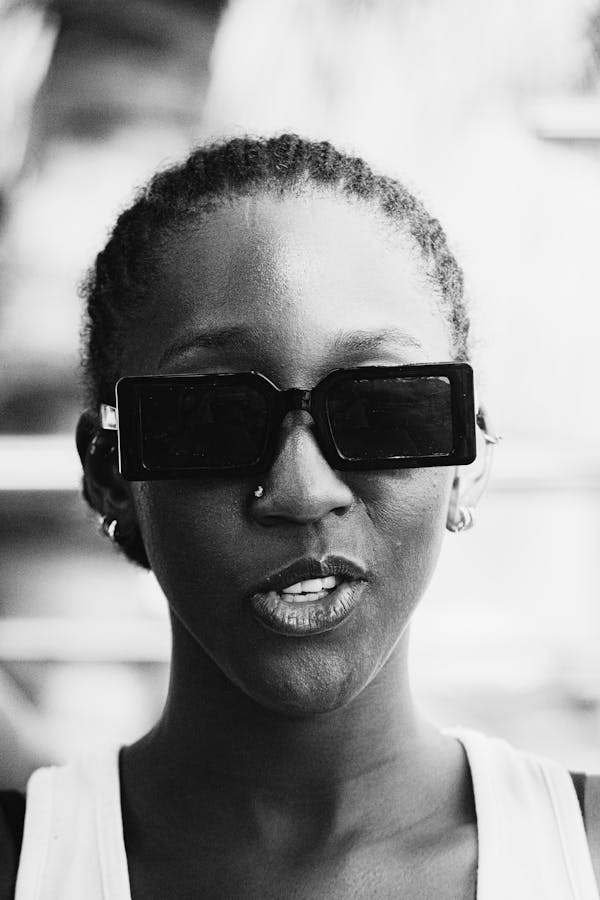
Characteristics: Face width and length are nearly equal. Soft jawline, full cheeks, rounded chin.
Best frames:
- Rectangular / square frames — Add structure and make the face appear longer
- Angular browline frames — Draw attention upward and create contrast with soft features
- Geometric frames — Hexagonal or octagonal shapes break up the roundness
Avoid: Round frames (they mirror the face shape and add visual width), small narrow frames.
Why it works: Angular lines create the illusion of a more defined jawline and cheekbones. The contrast between round face and sharp frame is what makes the look work.
💡 Try it now: Upload your photo to TryBestSpecs and let AI classify your face shape. Compare rectangular, browline, and geometric frames side by side in under 30 seconds.
Square Face: Soften with Round or Oval Frames


Characteristics: Strong jawline, wide forehead, face width and length are similar, angular features.
Best frames:
- Round frames — Soften the jaw and forehead angles
- Oval frames — Add curves without going fully circular
- Aviator frames — The teardrop shape balances a strong jaw
- Cat-eye frames — Draw attention upward and add feminine curves
Avoid: Boxy or overly angular frames (they exaggerate the squareness), very small frames that sit inside the face.
Why it works: Curved frames create visual counterbalance. Where the face has straight lines and sharp corners, round glasses introduce the missing softness.
Oval Face: Almost Anything Works (But Proportions Matter)

Characteristics: Balanced proportions, slightly longer than wide, gentle jawline, cheekbones are the widest point.
Best frames:
- Virtually any frame shape — Oval is considered the most versatile face shape
- Walnut-shaped frames — Slightly wider than the face at the temples
- Wayfarer-style frames — Classic proportions that complement balanced features
Avoid: Oversized frames that overwhelm the face, or frames that are too narrow (they make the face appear longer).
Why it works: Oval faces have natural symmetry. The best frames maintain that balance by following the face's natural proportions without distorting them.
💡 Even oval faces benefit from AI try-on. While most shapes work, the size, color, and material that suit you depend on skin tone and personal style. Try Best Frames →
Heart-Shaped Face: Balance a Wide Forehead with Bottom-Heavy Frames


Characteristics: Wide forehead and cheekbones, narrow chin, sometimes a widow's peak hairline.
Best frames:
- Bottom-heavy frames — Wider at the bottom, draws the eye downward to balance the forehead
- Light-colored or rimless frames — Do not add visual weight to the top of the face
- Oval frames — Soft and balanced, do not exaggerate the forehead
- Low-set temple frames — Sit lower on the face to complement the narrow chin
Avoid: Top-heavy frames, decorative or bold browline styles (they make the forehead look wider), very wide frames.
Why it works: Heart-shaped faces carry more visual weight at the top, so frames that add width or interest at the bottom create equilibrium.
Oblong / Rectangle Face: Add Width with Deep Frames

Characteristics: Face is noticeably longer than it is wide, straight cheek line, sometimes a high forehead.
Best frames:
- Deep / tall frames — Add vertical width to make the face appear shorter
- Round or oval frames — Break up the long straight lines
- Decorative or wide temples — Add horizontal width
- Oversized frames — Fill more of the face area
Avoid: Small narrow frames (they make the face look even longer), rectangular frames with low height.
Why it works: Deep frames take up more vertical space on the face, which visually shortens the overall length. Round shapes also interrupt the continuous straight lines of an oblong face.
Diamond Face: Highlight Eyes with Browline or Cat-Eye


Characteristics: Narrow forehead and jawline, wide cheekbones, angular features.
Best frames:
- Browline frames — Add width and structure at the brow to balance narrow forehead
- Cat-eye frames — Mirror and complement the cheekbone width
- Oval frames — Soften angular features
- Rimless or semi-rimless frames — Do not add bulk to already-prominent cheekbones
Avoid: Narrow frames (they exaggerate cheekbone width), frames that are wider than the cheekbones.
Why it works: Diamond faces need frames that balance the narrow forehead with the wide cheekbones. Browline and cat-eye styles add visual weight exactly where it is needed.
How to Actually Determine Your Face Shape
Most guides say "look in the mirror," but that is not precise. Here are three methods:
Method 1: AI Analysis (Recommended)
Upload a front-facing photo to TryBestSpecs. The AI measures facial geometry — jawline angle, forehead width, face length-to-width ratio — and classifies your shape in seconds. This is the most accurate method because it uses actual measurements, not visual guesses.
Method 2: The Mirror Trace
Stand in front of a mirror with a washable marker. Trace the outline of your face on the mirror. Step back and compare the shape to the descriptions above.
Method 3: Measurement Method
Use a flexible tape measure:
- Forehead width — Measure across the widest part of your forehead
- Cheekbone width — Measure across the widest part of your cheekbones
- Jawline width — Measure from the tip of your chin to the point below your ear, multiply by 2
- Face length — Measure from your hairline to the bottom of your chin
Compare ratios:
- Round: Width ≈ length, all measurements similar
- Square: Width ≈ length, strong angular jaw
- Oval: Length > width by ~1.5x, balanced jaw
- Heart: Forehead > jawline significantly
- Oblong: Length > width by > 1.5x
Beyond Face Shape: Other Factors That Matter
Face shape is the starting point, but it is not the only factor:
Skin Tone
Warm skin tones suit gold, tortoise, warm brown, and olive frames. Cool skin tones work well with silver, black, blue, and purple. Neutral skin tones can pull off most colors.
Skin Undertone
Look at the veins on your wrist. Blue/purple = cool undertone. Green = warm undertone. Mix of both = neutral.
Lifestyle
- Office work → Classic rectangular or browline in neutral colors
- Creative work → Bold colors, geometric shapes, oversized frames
- Active lifestyle → Lightweight, flexible materials, secure fit
- Fashion-forward → Cat-eye, aviator, vintage styles
Prescription Needs
If you wear prescription lenses, consider your lens thickness. Strong prescriptions look better in smaller frames (less edge thickness). Your eye care professional can advise on lens material and coatings.
The AI Advantage: Why Virtual Try-On Beats Store Shopping
Traditional glasses shopping has a problem: you try on 20 frames, get decision fatigue, and pick something "good enough." Online shopping is even worse — you guess from a product photo.
AI virtual try-on solves both problems:
- Instant face shape classification — No guessing or measuring
- Recommendations based on geometry — Not just "what looks popular"
- Realistic rendering — See how frames look on your actual face, not a model
- Compare side by side — Try 10 frames in the time it takes to try 1 in a store
- No pressure — Browse and compare at your own pace
TryBestSpecs does all of this in 30 seconds. Upload a photo, get your face shape analysis, and see realistic frame try-ons instantly.
Frequently Asked Questions
Can my face shape change over time?
Your bone structure stays the same, but weight changes, aging, and hairstyle can alter how your face shape appears. Re-analyze periodically.
What if my face is between two shapes?
Most people are a blend. AI analysis gives you a primary shape and sometimes a secondary one. Use the primary shape for frame selection and experiment with styles from both categories.
Do the same rules apply for sunglasses?
Yes, but sunglasses are more forgiving because the dark lenses reduce the visual complexity. You can experiment more boldly with sunglasses.
Should I match my glasses to my hair color?
Hair color affects the overall color palette but should not override face shape. Choose frame shape for face shape, then pick a color that works with your hair and skin tone.
Find Your Perfect Frames in 30 Seconds
Stop guessing. Upload your photo to TryBestSpecs and let AI find the glasses that fit your face shape — with realistic try-on results you can save, share, and revisit.
Last updated: May 2026 Author: TryBestSpecs Team Reviewed by: AI Eyewear Specialist